
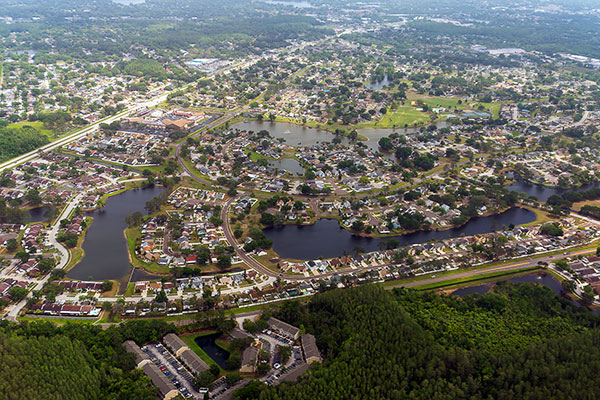
Whole-home surge protection installed at your panel
Tailwind Electric installs whole-home surge protective devices at the main panel or meter for homes across Pinellas County and nearby Pasco, with a 5-year, 100% parts and labor warranty. Owner James Booth holds Florida Certified Electrical Contractor license EC13016047 and has more than 20 years in the trade. A panel-mounted device protects the hard-wired equipment a plug-in strip never reaches: the A/C, pool pump, water heater and EV charger.
- Type 1 or 2Installed at or beside your main panel
- 24/7A person answers day and night
- 5 years100% parts and labor warranty on surge installs
- 5.0 ★20 Google reviews (1 Nov 2026)
Type 1, Type 2 and Type 3 surge protection: what each one covers
Surge protective devices (SPDs) come in three types, and the type is set by where the device connects in your electrical system. A whole-home system starts at the service and is backed up by plug-in protection at sensitive electronics.
| Type | Where it connects | What it is for | Who installs it |
|---|---|---|---|
| Type 1 | On the supply side of the main disconnect, such as at the meter or service entrance. | Surges arriving on the utility lines before they reach the main breaker. | Electrician Works on the service conductors. |
| Type 2 | On the load side of the main breaker, usually a breaker or module in the main panel. | The whole panel and every hard-wired circuit it feeds: A/C, pool pump, water heater, well pump, EV charger. | Electrician Wired inside the panel. |
| Type 3 | At the point of use: a surge strip or protected outlet, after the branch-circuit breaker. | The last line of defense for TVs, computers and network gear plugged in nearby. | You Plug-in strips need no electrician. |
The code allows a Type 1 or Type 2 device at a home's service. Type definitions follow NEC Article 242 as summarised by Leviton.
Florida requires surge protection when a home's service is replaced
Since the 8th Edition Florida Building Code took effect on 31 December 2023, Florida has enforced the 2020 National Electrical Code. Section 230.67 of that code changed what a home's service has to include:
- Every home service: "All services supplying dwelling units shall be provided with a surge-protective device (SPD)."
- Where it goes: the SPD must be part of the service equipment or located immediately next to it.
- What kind: a Type 1 or Type 2 SPD.
- Replacements count: where service equipment is replaced, the same requirement applies. That is why a permitted panel replacement or service upgrade from us includes a surge protector.
Sources: NEMA code alert, Florida and Leviton, NEC 230.67 requirements.
What a whole-home surge protector does and does not do
A panel-mounted SPD limits voltage spikes that come in on the utility lines or start inside the house, such as when a large motor cycles. It is one layer, not a force field. Before you buy, know these four limits:
- It is not a lightning rod. It handles surges on the wiring. It cannot stop a direct strike to the house.
- It works with good grounding. A surge protector sends excess energy to ground, so we check the grounding and bonding when we install it.
- Keep plug-in protection for electronics. Type 3 strips at the TV and computer still help, and they cost little.
- Devices wear out. SPDs absorb energy each time they work. Check the status indicator on yours after a big storm, and call if it shows a fault.
What we check before we install one
A surge protector is only as good as the panel and service it is connected to. On the visit, James looks at four things and tells you what he found:
- Room in the panel: whether there is space for the device and its breaker, or whether the panel itself is due for replacement.
- Grounding and bonding: the ground connection the device depends on.
- The meter can and service entrance: corrosion is common near the water in Pinellas, and a loose or rusted connection is worth fixing first.
- Short, direct wiring: mounting the device so its leads to the panel stay short, which helps it react fast.
Surge protection for the equipment you just paid for
Hard-wired equipment is exactly what a plug-in strip cannot cover. If you are adding any of these, it is a good time to add whole-home protection in the same visit:
- Level 2 EV chargers
- Pool, hot tub and pool heater wiring
- Tankless water heater wiring
- Whole-home generators
- Generator interlocks and transfer switches
- Boat dock wiring
How customers describe working with James
Shown the problem, not just told
A water heater that kept failing turned out to be a faulty breaker. James replaced it and checked everything before leaving.
"He took the time to walk us through exactly what was wrong and showed us visually." — Mark L., Google
Cost explained up front
A light fixture job that needed new wire from the attic to the wall switches, plus new switches and dimmers.
"He communicates very clearly up front what the project will cost and also what situations might cause the cost to go up." — Chris C., Google
More on our reviews page.
Where we install surge protection
From our shop at 1327 Illinois Ave in Palm Harbor we cover Pinellas County and nearby Pasco:
- Palm Harbor
- St. Petersburg
- Clearwater
- Dunedin
- Largo
- Tarpon Springs
- Oldsmar
- New Port Richey
- Safety Harbor
Lost power or smelled burning after a storm? See 24/7 emergency repairs and troubleshooting.
Surge protection questions
How much does it cost to install a whole house surge protector?
It depends on the device, whether your panel has room for it and whether the grounding needs work. James quotes after looking at your panel and tells you what could change the price before you approve.
Do I need an electrician to install a whole house surge protector?
Yes. A whole-home surge protector is wired into the service panel or next to it, which means working inside live service equipment. In Florida that is work for a licensed electrical contractor. Tailwind Electric installs them under license EC13016047.
Is it worth getting a whole house surge protector?
For most homes, yes, and when service equipment is replaced it is no longer optional: the 2020 National Electrical Code, which Florida enforces, requires a Type 1 or Type 2 surge protective device on every service that supplies a home. It protects hard-wired equipment such as the A/C, pool pump and water heater that plug-in strips cannot reach.
Where should a whole house surge protector be installed?
At the service. The code requires it to be part of the service equipment or right next to it, which usually means in or beside your main panel, or at the meter on the supply side. Short, direct wiring to the panel helps it work as designed.
Does Florida require a surge protector on a new electrical panel?
Yes. The 8th Edition Florida Building Code adopts the 2020 National Electrical Code, and section 230.67 requires a surge protective device on services supplying dwelling units, including when the service equipment is replaced. A permitted panel swap should include one.
Tailwind Electric · Florida Certified Electrical Contractor EC13016047
1327 Illinois Ave, Palm Harbor, FL 34683 · Open 24 hours, 7 days
Phone: (727) 430-1764 · Email: tailwindelectric@gmail.com · Google Maps
Call about surge protection